




QA automation with AI is no more a luxury, it is a need. As AI testing tools and automation AI tools continue to gain significant ground, software teams are implementing AI testing to enhance the precision and velocity of the testing process. By implementing AI within QA teams, the paradigm of software testing is improving.
Recent research shows how fast AI adoption is climbing. Over the past year the share of organizations using AI in at least one business function grew by more than a quarter, to 72% compared to 55% before. That rise shows how central AI has become, including to the testing process. AI now helps with everything from test creation and test execution to regression testing and test maintenance.
This article reviews the top 15 best AI tools for QA automation, with their features, benefits, and real use cases. We will also explore the specifics of these best software testing tools in detail so you can decide which ones suit your team.
What Is the Role of AI in QA Automation?
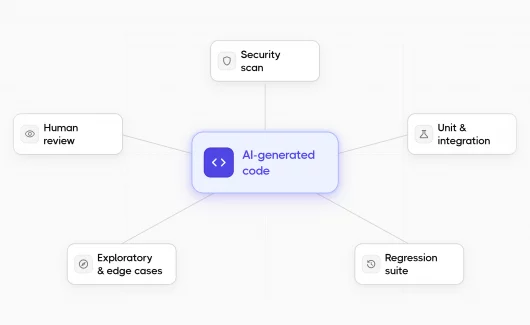
AI in QA automation changes how teams handle test management and test coverage. Instead of writing and fixing every script by hand, teams use AI to generate tests, widen coverage, and keep suites stable as the product changes. The result is faster feedback and fewer defects that reach production.
How Do AI Testing Tools Speed Up Test Creation and Execution?
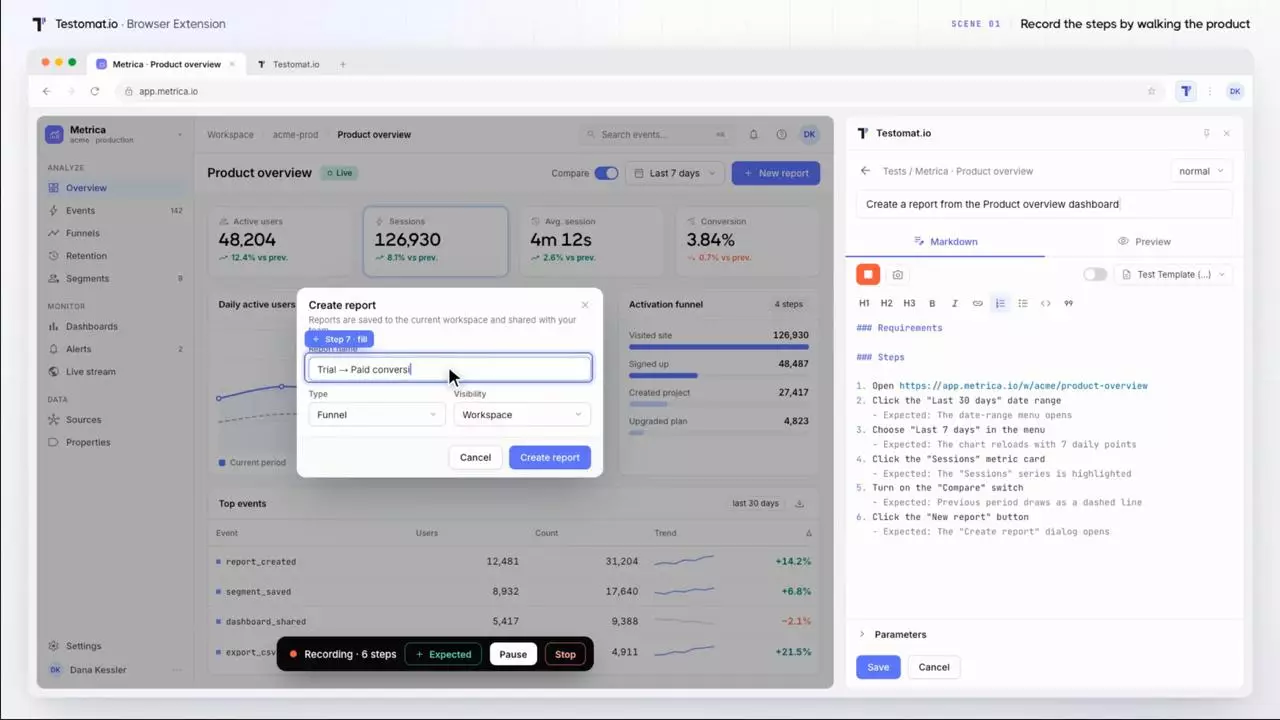
The main advantage of AI test automation tools is the speed at which they generate and run test cases. Manual test creation is slow and error-prone, and it often misses scenarios. With generative AI and natural language processing, automation tools for QA can create test scripts in seconds from user stories, Figma designs, or existing app data.
How Do AI Testing Tools Improve Test Coverage and Reliability?
AI testing tools such as Testomat.io help you cover every part of the application. Using prior test data and machine learning, AI automation testing tools find edge cases and complex situations that people may overlook. That improves results and raises confidence in how the software performs.
How Does AI Reduce Test Maintenance?
AI-based test automation tools adapt when the application changes. Self-healing tests handle UI changes on their own: instead of editing scripts by hand each time, the tool adjusts locators and steps to match the new interface, which makes suites much easier to maintain.
What Are the Best AI Testing Tools for QA Automation in 2026?
Below are the best AI tools for QA automation that help your team raise both speed and quality.
1. Testomat.io
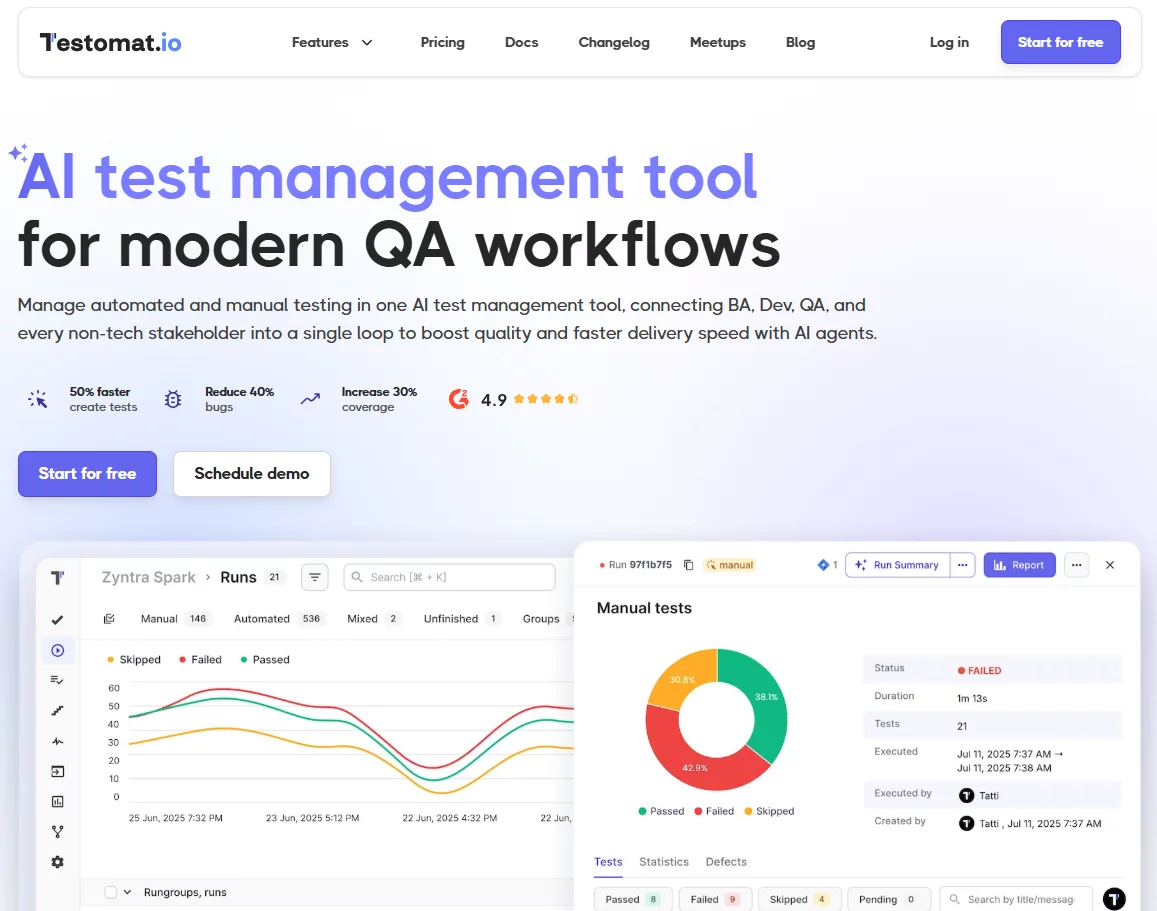
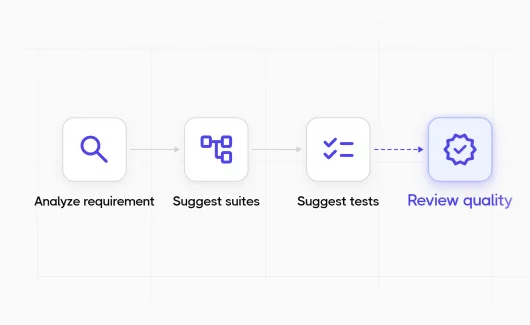
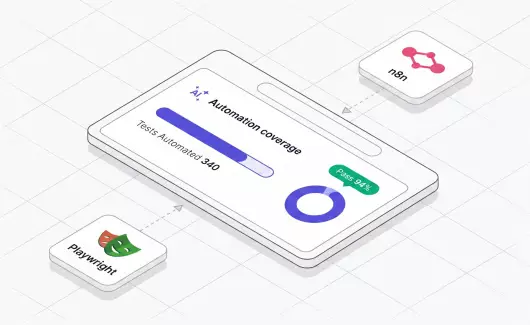
Testomat.io is an AI-native test management platform that keeps manual and automated tests in one workspace. AI runs through the whole flow: creating tests, exploring the app, reporting, and maintenance.
Key Features:
- AI test generation and AI agent assistant: Generate test cases from user stories, and ask the built-in AI agent to draft automation code for your framework.
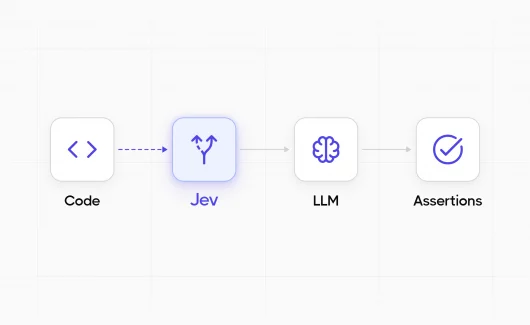
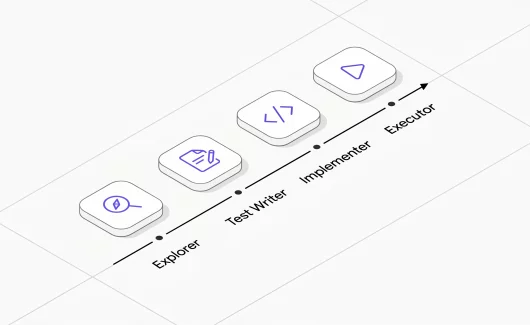
- AI agents: One-click agents that run on your real test data. They audit coverage and release readiness, turn source code into readable test descriptions, and keep the suite clean, with every change reversible through Pulse.
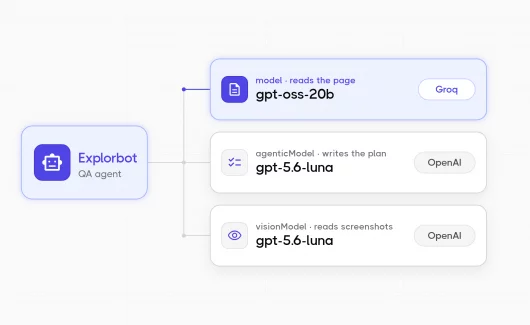
- Explorbot: An open-source AI agent that explores your live app on its own, tries unexpected and malicious inputs, and saves the passing flows as Playwright or CodeceptJS files, at roughly 30 to 50 tests per hour.
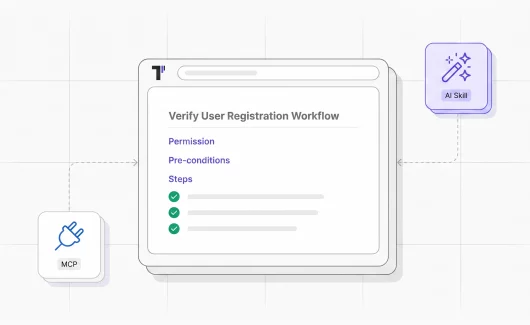
- AI skills: Pre-built skills for common QA jobs, such as coverage audits, defect triage, and test data generation, with the option to write your own.
- AI-prompted reports: Clear analytics with run history, pass/fail trends, flaky test detection, and defect tracking.
- Integrations: Works with Playwright, Cypress, Jira, GitHub, GitLab, Jenkins, and CircleCI.
Why It Works: Testomat.io keeps manual and automated testing in one place and lets AI handle the repetitive work, from drafting cases to exploring the app with Explorbot. Your team spends its time on real quality decisions instead of upkeep.
2. Playwright
Playwright is an open-source automation framework for testing web applications across every major browser, now with Playwright MCP for AI-agent control.
Key Features:
- Cross-Browser Testing: Runs on Chromium, Firefox, and WebKit from a single API.
- Parallel Execution: Runs many tests at once to cut total run time.
- Playwright MCP: Lets AI agents drive the browser through the Model Context Protocol; test prioritization still needs third-party tools.
Why It Works: Broad browser coverage and parallel runs make Playwright fast and reliable, and MCP opens it to AI-driven workflows.
3. Cypress
Cypress is an open-source end-to-end framework for web applications, known for fast feedback while you write tests.
Key Features:
- Instant Feedback: Runs in the browser and reloads tests as you edit them.
- Time-Travel Debugging: Step back through each command to see exactly what happened.
- AI Test Selection: Available through third-party plugins that prioritize tests by past results.
Why It Works: Quick feedback and clear debugging shorten the write-and-fix loop, so teams ship reliable web features faster.
4. Healenium
Healenium is an open-source self-healing library for Selenium and Appium that keeps tests running when the UI changes.
Key Features:
- Self-Healing Locators: Updates broken selectors automatically after UI changes.
- Web and Mobile: Works with Selenium for web and Appium for mobile.
- Regression Support: Reduces false failures during regression runs.
Why It Works: Self-healing cuts the manual work of fixing selectors, so existing suites stay green through UI updates.
5. Postman
Postman is a widely used API platform, and its Postbot AI assistant writes and debugs API tests from plain language.
Key Features:
- Postbot Test Generation: Creates test scripts and assertions from natural-language prompts, including edge and negative cases.
- AI Debugging: Explains failed tests and suggests fixes.
- CI/CD Integration: Runs API tests inside continuous delivery pipelines.
Why It Works: Postbot lowers the effort of writing API tests, so both technical and non-technical members can check API quality.
6. CodeceptJS
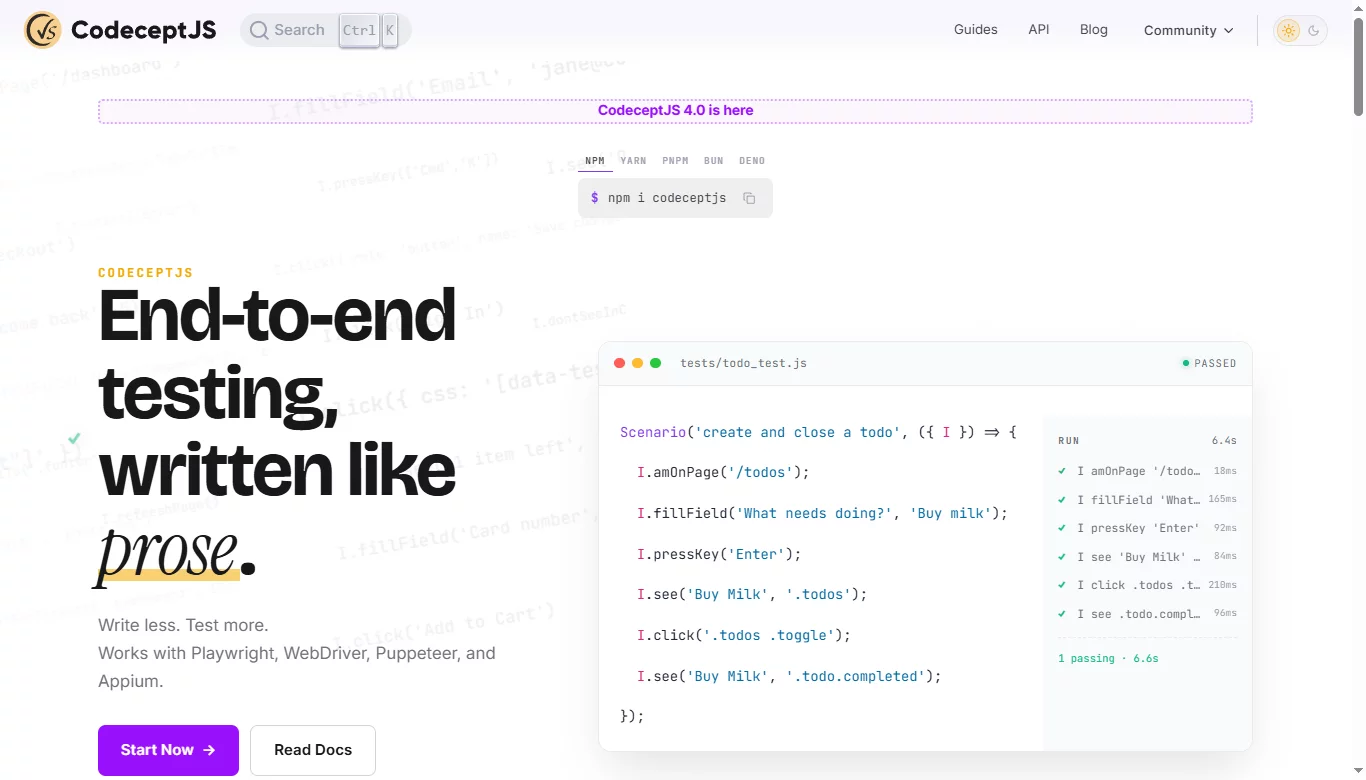
CodeceptJS is an open-source end-to-end framework with a readable, scenario-style syntax and built-in AI helpers.
Key Features:
- Readable Scenarios: Write tests in clear steps that non-technical members can follow.
- AI Helpers: Use AI to write steps, heal locators, and assist with debugging.
- Cross-Platform: Runs web and mobile tests on several backends, including Playwright and WebDriver.
Why It Works: A readable syntax plus AI assistance makes end-to-end tests easier to write and maintain across stacks.
7. Testsigma
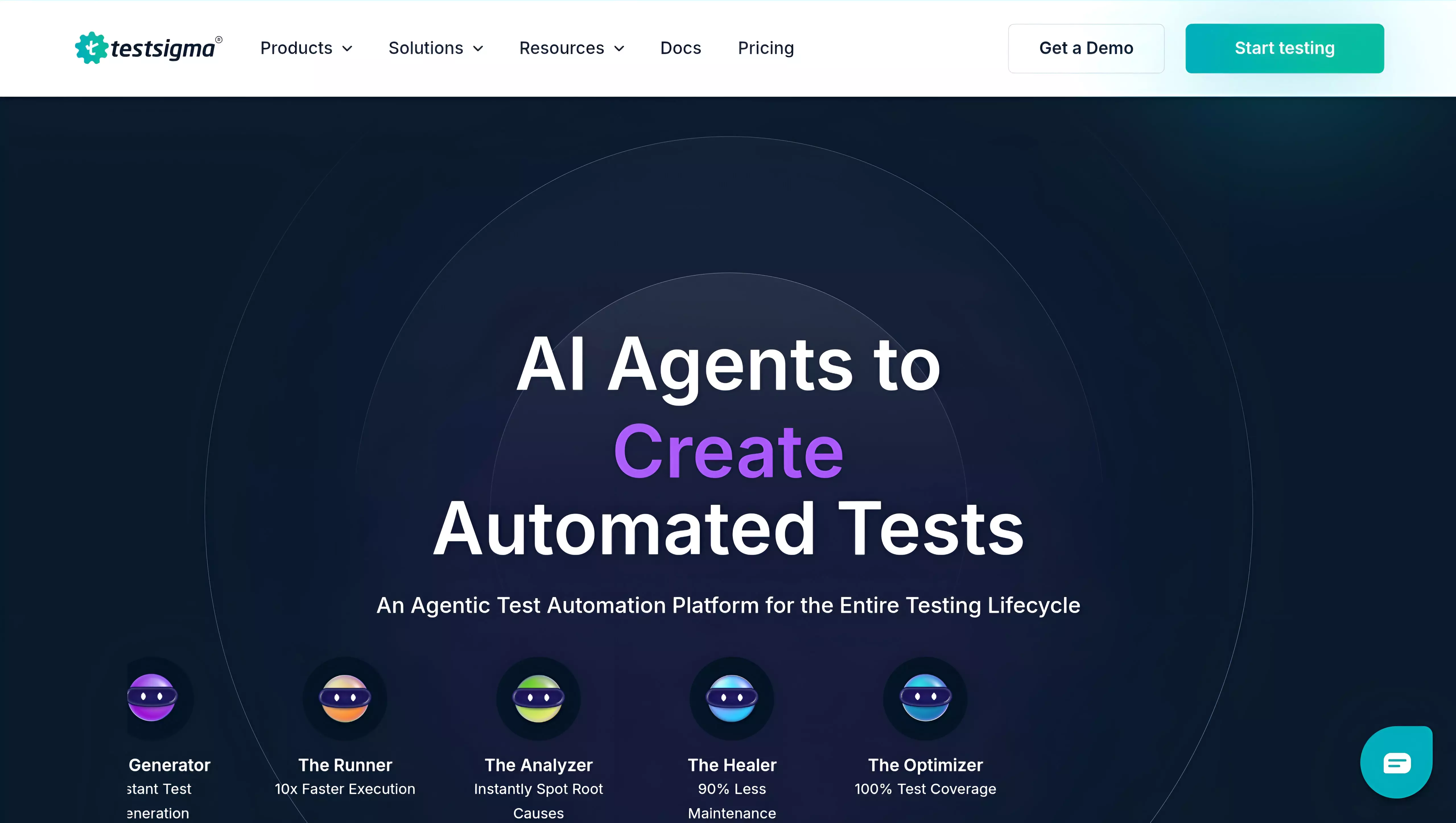
Testsigma is a no-code test automation platform built around Atto, a set of AI agents that handle the full testing lifecycle for web, mobile, and API.
Key Features:
- Atto AI Agents: Specialized agents plan, generate, run, heal, and analyze tests, and report bugs.
- No-Code Creation: Build tests in plain language without writing code.
- Self-Healing: Adapts tests to UI changes to reduce maintenance.
Why It Works: Agentic AI takes on the repetitive lifecycle work, so smaller or less technical teams can automate more with less upkeep.
8. Appvance
Appvance IQ is an autonomous testing platform for enterprises that uses AI to create and run tests for web and mobile applications.
Key Features:
- Autonomous Test Generation: AI writes test scripts and explores application paths on its own.
- Self-Healing: Fixes broken scripts automatically to keep suites stable.
- Broad Coverage: Supports functional, performance, and security testing.
Why It Works: Autonomous generation surfaces paths people might miss, which suits large enterprises that need wide coverage.
9. BotGauge
BotGauge is a GenAI-powered, low-code autonomous testing platform that discovers, generates, and maintains test coverage across the QA lifecycle.
Key Features:
- Autonomous Coverage: AI agents decide what to test, generate the tests, and run them at scale.
- Self-Healing: Repairs broken test elements automatically to reduce maintenance.
- Continuous Testing: Runs across browsers, devices, and CI/CD pipelines.
Why It Works: BotGauge aims for high coverage with little upkeep through its Autonomous QA as a Solution model, so teams release faster.
10. OpenText UFT One
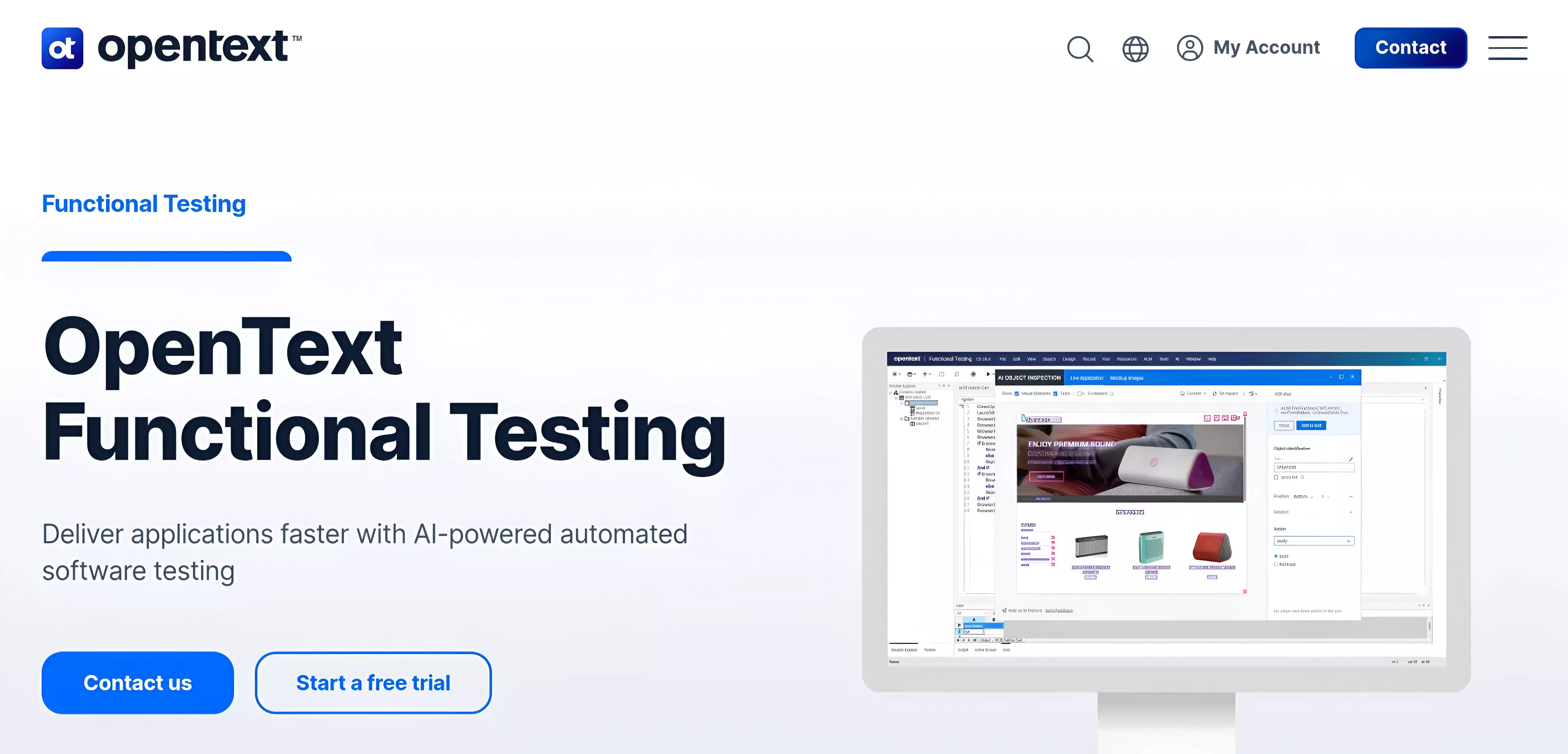
OpenText UFT One is an enterprise functional testing tool that now uses AI object recognition and self-healing to keep scripts stable across mixed technology stacks.
Key Features:
- AI Object Recognition: Identifies UI elements with machine learning and OCR, backed by an object-detection cloud service.
- Self-Healing: Adapts locators when the UI changes, so scripts keep running.
- Wide Support: Covers API, web, mobile, and enterprise apps such as SAP and Salesforce.
Why It Works: AI recognition and self-healing reduce maintenance across varied environments, which suits large, complex estates.
11. Mabl
Mabl is an AI-native, low-code test automation platform with agentic test creation for web, mobile, and API.
Key Features:
- Agentic Test Creation: GenAI creates and updates tests with conversational planning and reuse of existing assets.
- Auto-Healing: Multi-model AI fixes broken tests and adapts to application changes.
- Playwright Integration and Analytics: Integrates with Playwright and reports on coverage and trends.
Why It Works: Mabl automates creation and maintenance, so teams keep tests current as applications and AI coding agents change the product.
12. TestMu AI
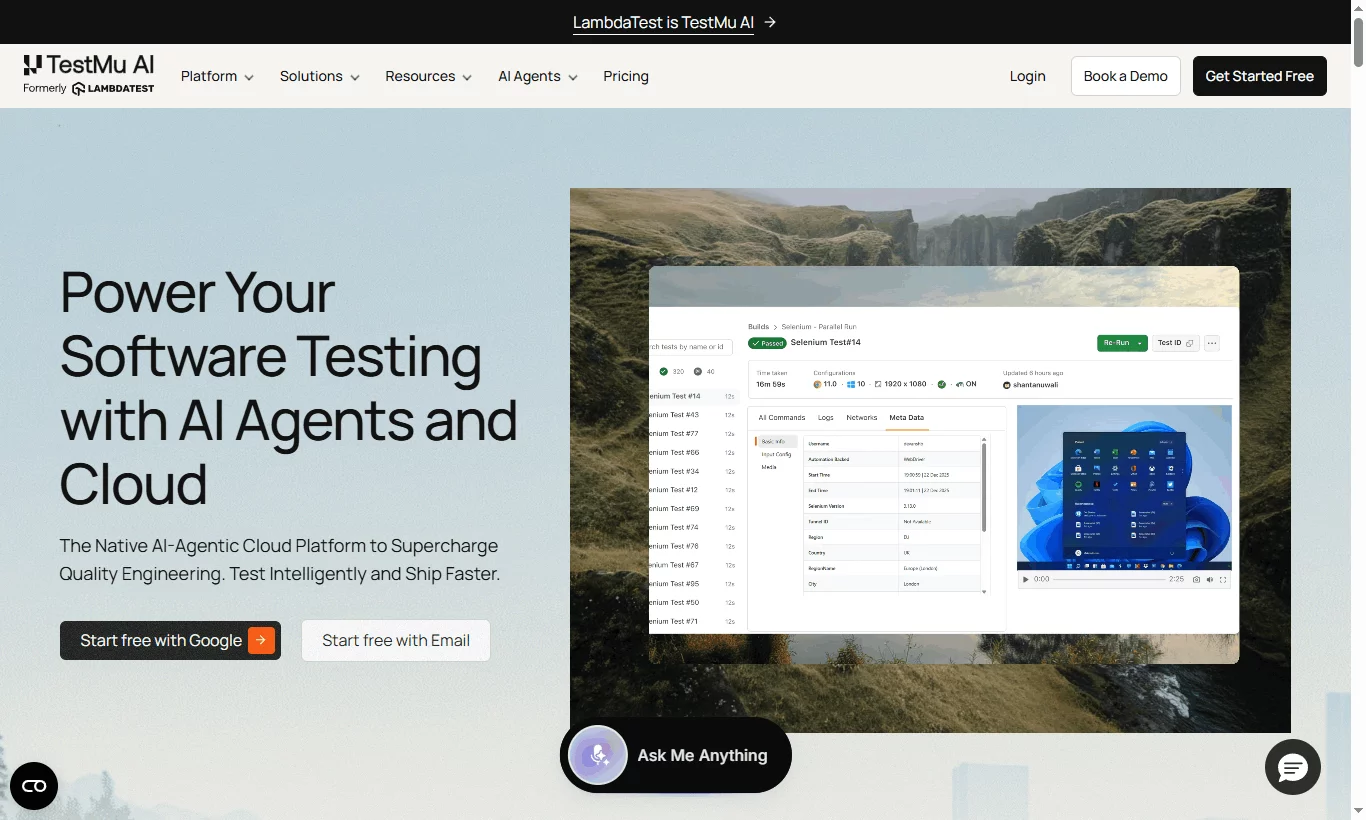
TestMu AI, formerly LambdaTest, is an AI-driven cross-browser testing platform that runs web application tests across more than 3,000 browser and operating system combinations, plus real iOS and Android devices in the cloud. The company rebranded in January 2026, extending the platform from cross-browser testing into agentic AI testing for web, mobile, and AI applications.
Key Features:
- KaneAI: A GenAI-native testing agent that plans, writes, and updates tests from natural-language instructions, so team members without a coding background can create automation.
- Visual AI Testing: Detects visual defects across many browsers and devices.
- HyperExecute: A test orchestration engine that distributes tests intelligently for faster execution.
- Agent Testing: Validates voice AI assistants and chatbots, not only traditional web interfaces.
Why It Works: TestMu AI lets QA teams test across many browsers and devices at once, so visual and functional defects surface early. KaneAI lowers the barrier to writing tests, and HyperExecute keeps large suites fast.
13. Katalon
Katalon is a test automation platform with an AI Assistant, the StudioAssist code helper, and the AI-native TrueTest system.
Key Features:
- StudioAssist: Writes Groovy from natural-language prompts, explains existing code, and generates test steps.
- TrueTest: Learns from real user flows and turns manual tests into automation scripts.
- Agent Mode: An AI collaborator that plans and builds tests across the platform and the desktop app.
Why It Works: AI authoring and TrueTest speed up test creation and keep tests aligned with how users actually use the application.
14. Applitools
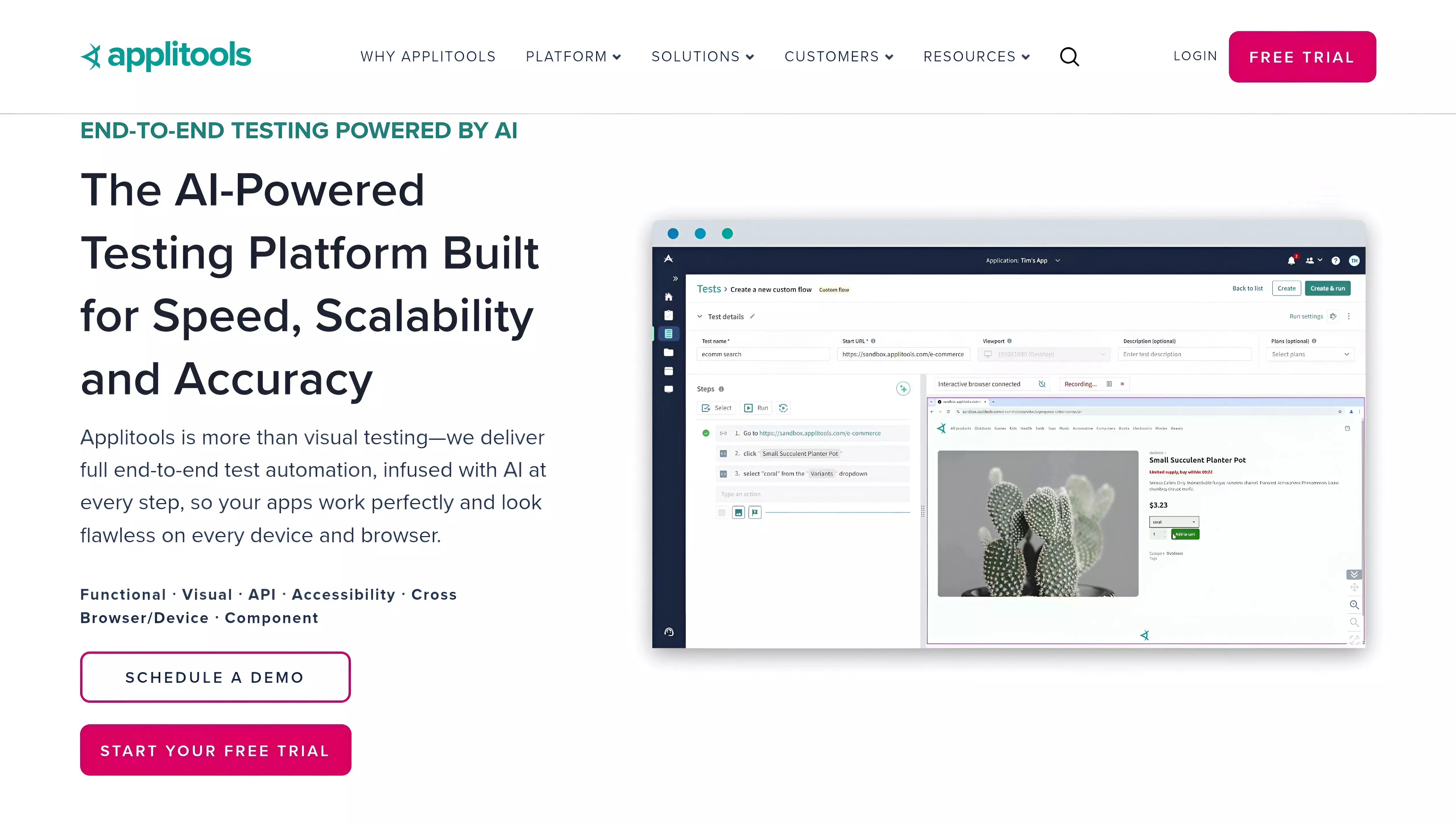
Applitools is the visual AI testing leader, pairing its Eyes visual validator with Autonomous, an AI agent that creates and runs end-to-end tests.
Key Features:
- Visual AI (Eyes): Detects UI regressions and layout issues across browsers and devices.
- Applitools Autonomous: Generates, maintains, and runs functional and visual tests without scripting.
- Cross-Platform: Validates web, mobile, and desktop.
Why It Works: Visual AI catches design and layout defects early, and Autonomous adds scriptless functional coverage on top.
15. Testim
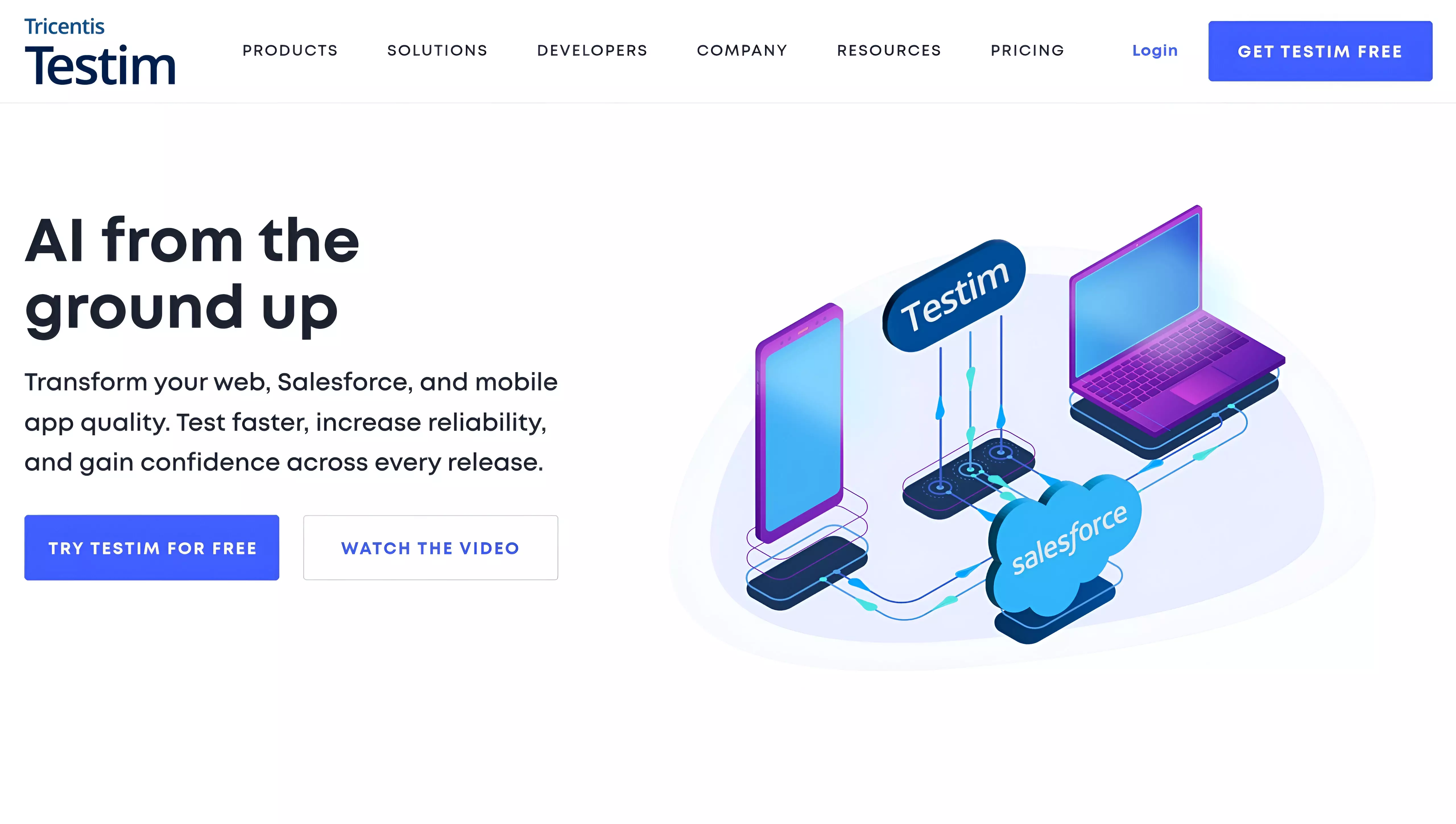
Testim, part of the Tricentis platform since 2022, is an AI-powered test automation tool for web, mobile, and Salesforce tests.
Key Features:
- Smart Locators and Self-Healing: AI keeps tests stable as the UI changes, which reduces maintenance.
- AI Test Creation: Generates tests and steps to speed up authoring.
- Tricentis Ecosystem: Integrates with Tricentis tools such as Tosca and qTest.
Why It Works: Self-healing and smart locators keep suites resilient, and the Tricentis backing suits teams standardizing on one vendor.
Which Are the Best AI Testing Tools? A Comparison
| Tool | Benefits | Cons | Why It Works |
| Testomat.io |
|
|
Automates creation, exploration, and reporting, freeing teams from repetitive work. |
| Playwright |
|
|
Fast, reliable browser coverage with an entry point for AI-driven workflows. |
| Cypress |
|
|
Quick feedback and clear debugging shorten the write-and-fix loop. |
| Healenium |
|
|
Keeps existing Selenium and Appium suites stable through UI changes. |
| Postman |
|
|
Makes API testing faster and reachable for non-technical members. |
| CodeceptJS |
|
|
A readable syntax plus AI assistance simplifies end-to-end testing. |
| Testsigma |
|
|
Agentic AI makes automation accessible with little maintenance. |
| Appvance |
|
|
Autonomous generation covers edge cases across enterprise apps. |
| BotGauge |
|
|
High coverage with little upkeep through its Autonomous QA model. |
| OpenText UFT One |
|
|
Reduces maintenance across mixed enterprise technology stacks. |
| Mabl |
|
|
Automates creation and maintenance to keep tests current. |
| TestMu AI (formerly LambdaTest) |
|
|
Detects visual and functional defects fast across many environments. |
| Katalon (StudioAssist and TrueTest) |
|
|
AI authoring keeps tests aligned with real user flows. |
| Applitools |
|
|
Catches layout and design defects early, plus scriptless coverage. |
| Testim (Tricentis) |
|
|
Resilient suites for teams standardizing on Tricentis tools. |
Conclusion
AI is now a core part of test execution in software testing, and its role keeps growing. Whether your goal is to automate regression testing, widen test coverage, or reduce test maintenance, AI-enhanced tools such as Testomat.io, Cypress, and Playwright can help.
The best software testing tools let teams test smarter, faster, and more reliably. As software delivery keeps accelerating, AI-based test automation tools help make sure your applications stay functional, scalable, and easy to use. The time to adopt AI for QA is now.
You do not need all 15 tools to see the benefit of AI in QA. Start with the layer that ties everything together. Testomat.io combines AI functionality and clear reporting in one AI test management platform, right next to your manual and automated tests. It plugs into Playwright, Cypress, Jira, GitHub, and GitLab, so you keep your current stack. Start with Testomat.io for free and let AI take the repetitive work off your team, so testers spend their time on real quality decisions.